
The Highest-Grade Copper Hole In The Camp’s History.
Nine Mile Brook — 10.12% Cu over 15.10m (NM220004, NI 43-101), with internal samples to 18.55% Cu — in a camp mined for 65 years.
Next Drill Program In Development — Apex Defining Targets
See Technical Notes.
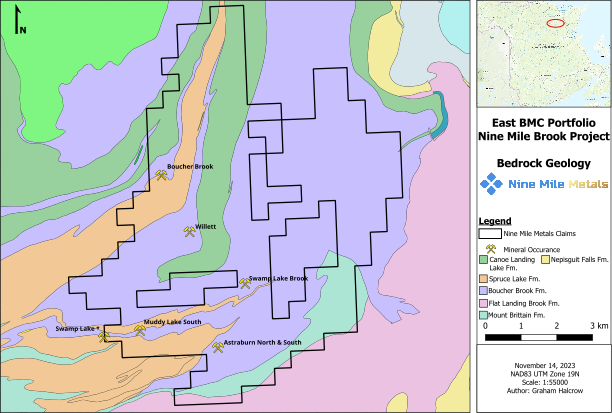
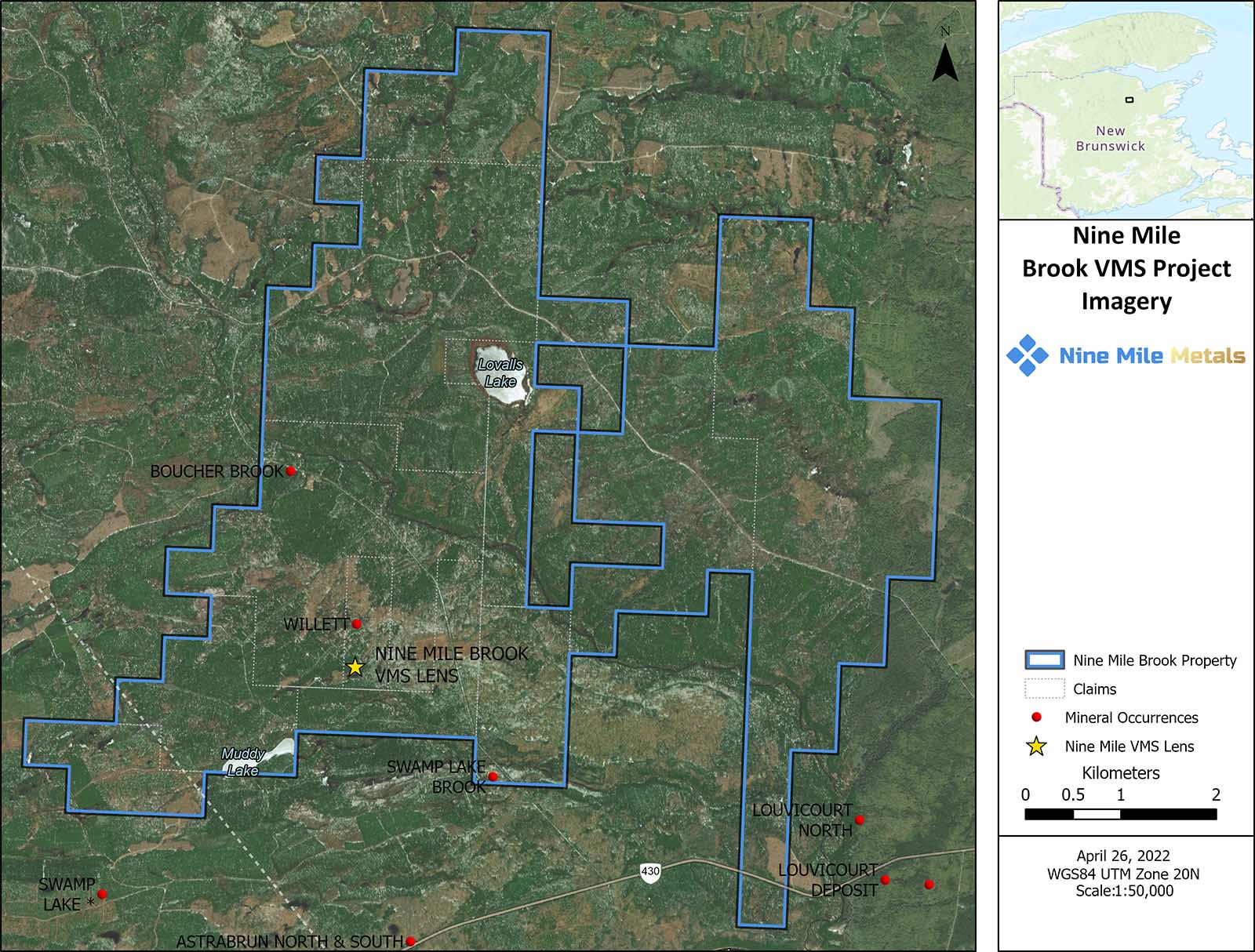
The Nine Mile Brook property is 50.04 km2 in size and located 10 kilometers southwest of the historic Brunswick 12 mine, one of the largest underground zinc mines in the world. Operating for 49 years, the Brunswick 12 is classified as a Supergiant, the geological reserves estimated at 335 Mt with production totalling 137 million tons grading 8.74% Zn, 3.44% Pb, 0.37% Cu, and 102 g/t Ag from 1964-2013.
At Nine Mile Brook, VMS High-Grade mineral occurrences are present:
Hosting the Nine Mile Brook mineralization is the California Lake Group of rocks, one of the key units known to host VMS deposits in the BMC including Trevali Mining Corporations producing Caribou mine.
Typically, a VMS deposit consists of a series of mineralized lenses of varying sizes and orientation. At the Caribou Mine, the mineralization is composed of 7 en-echelon lenses zoned mineralogically from a copper rich (vent complex) near the bottom and western part of each lens to lead-zinc rich vent distal bedded sulphides near the top and eastern part of each lens.
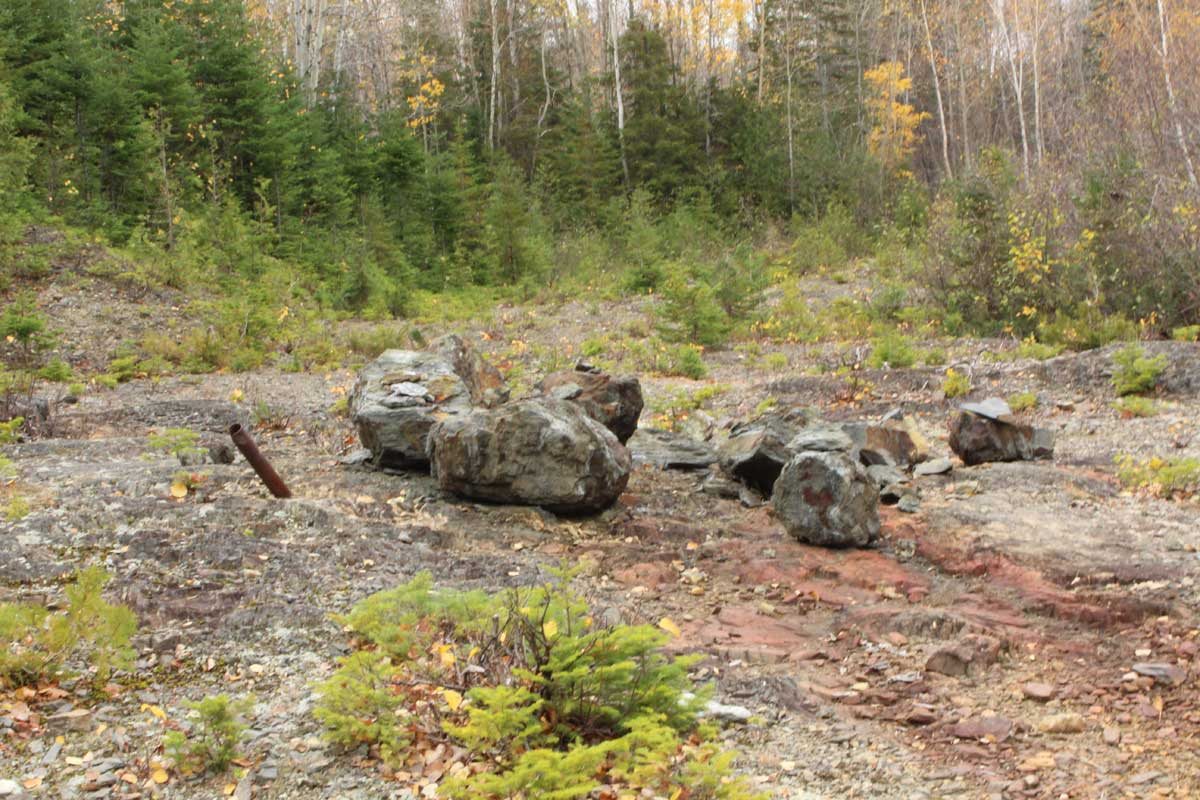
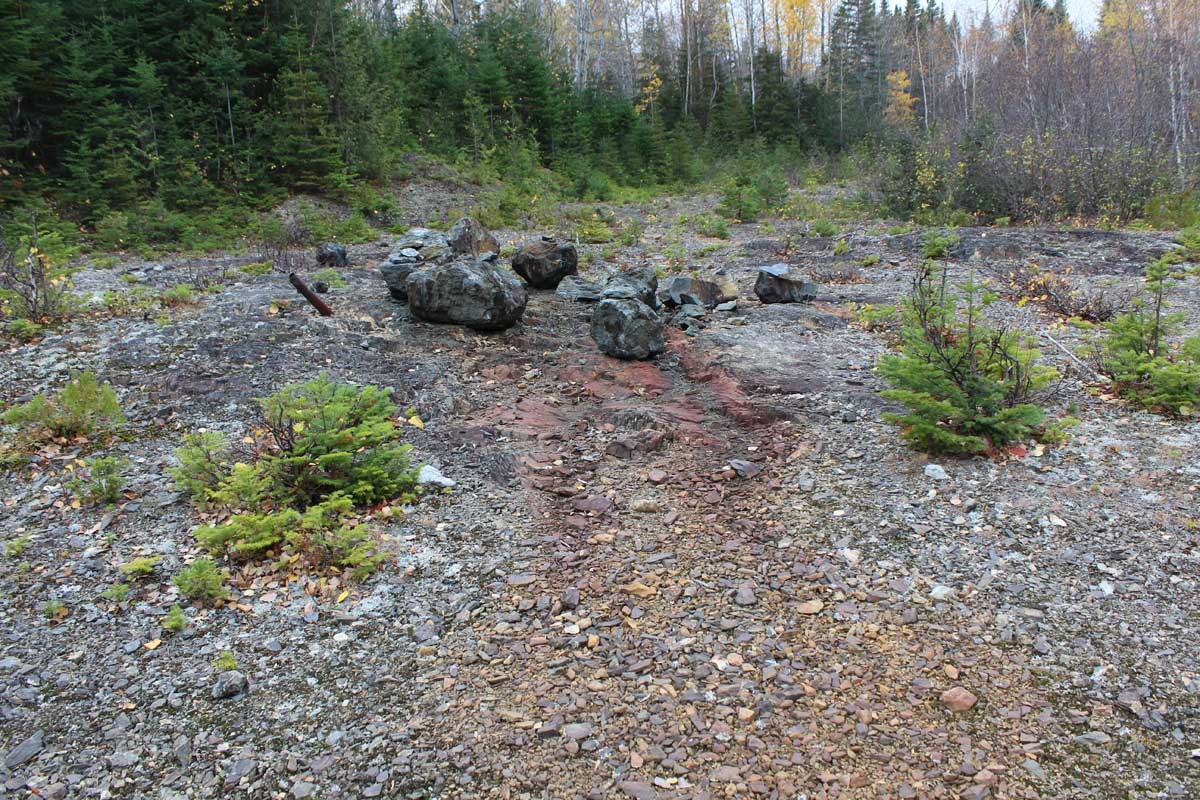
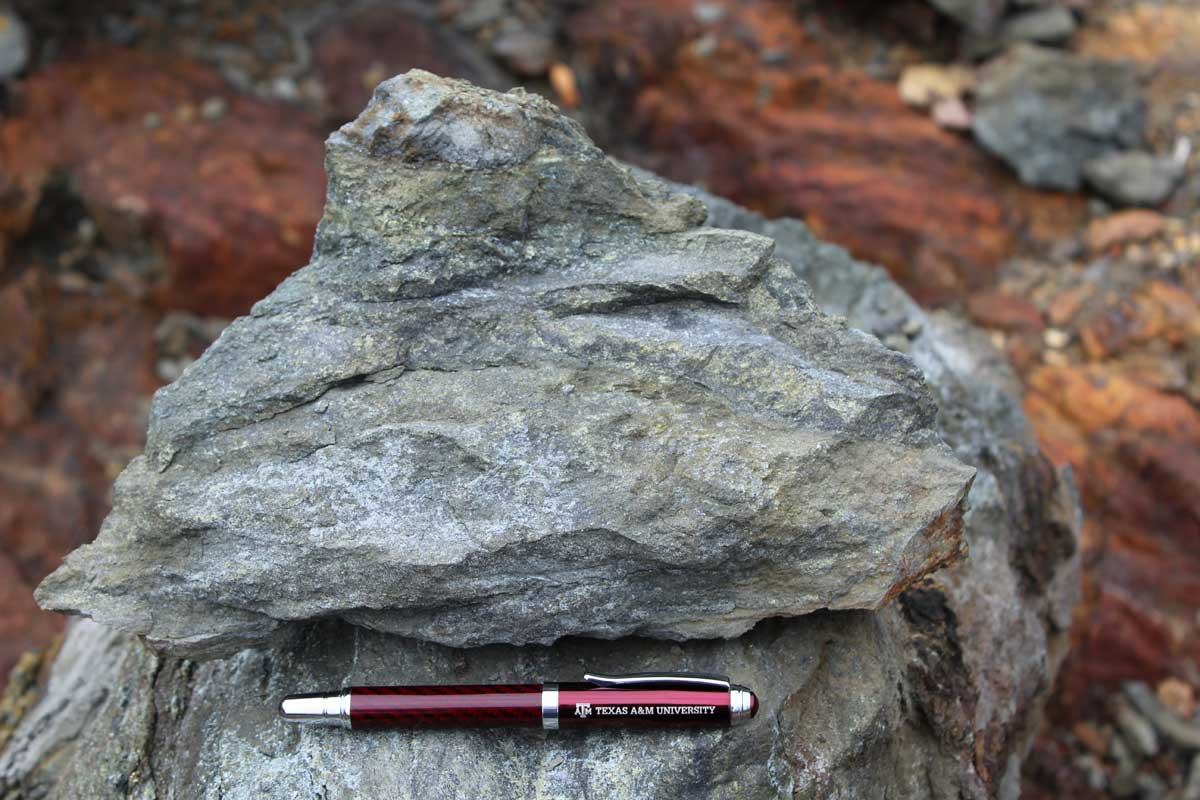
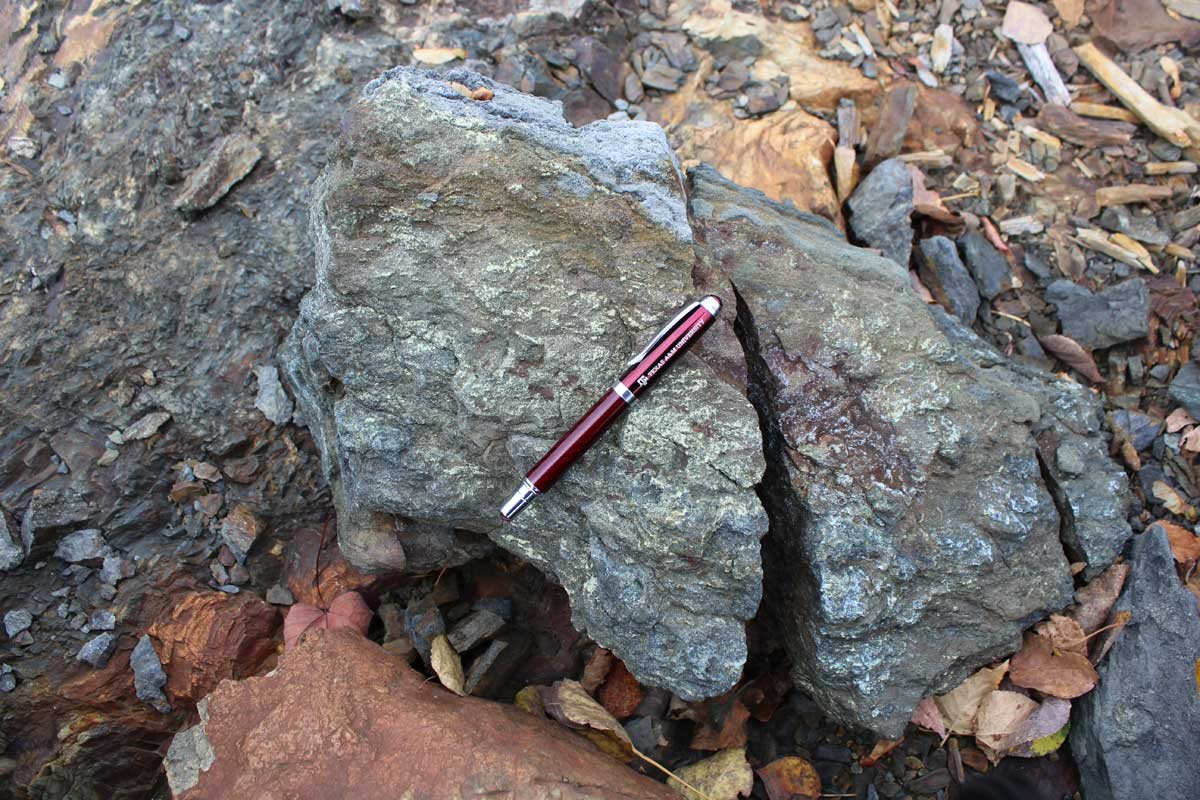
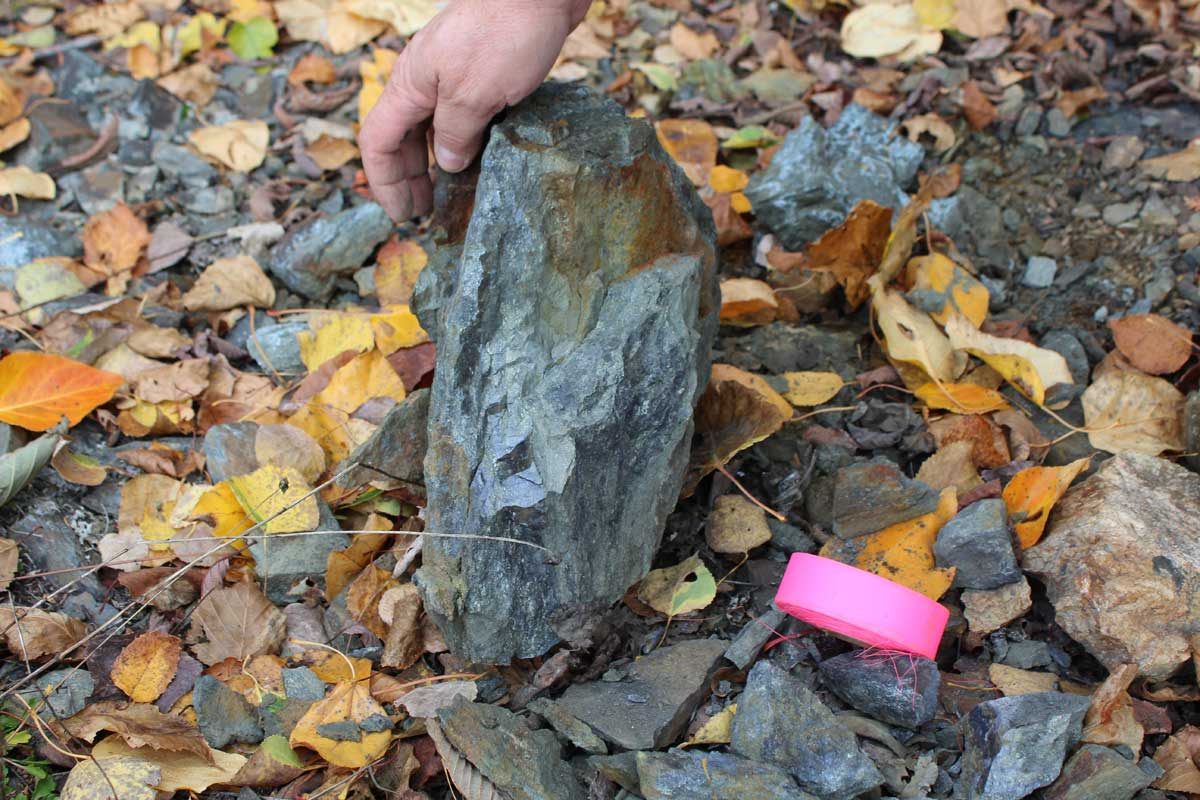
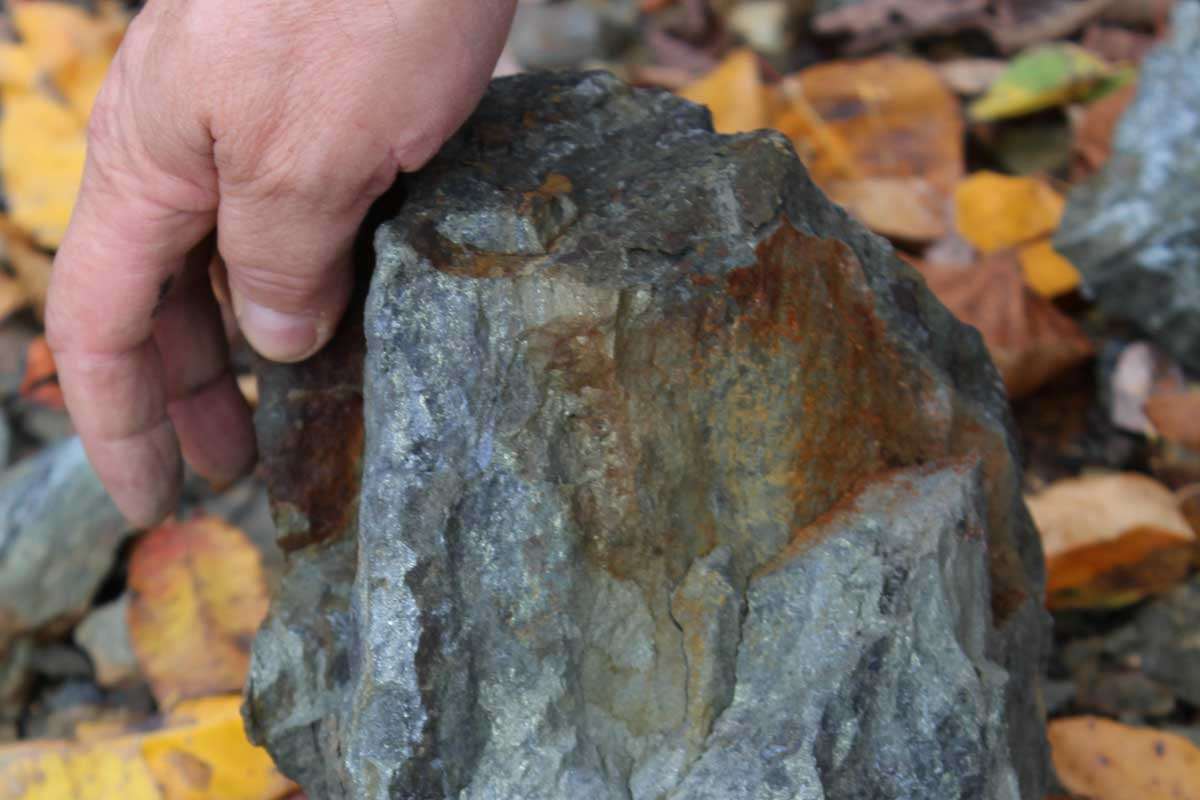
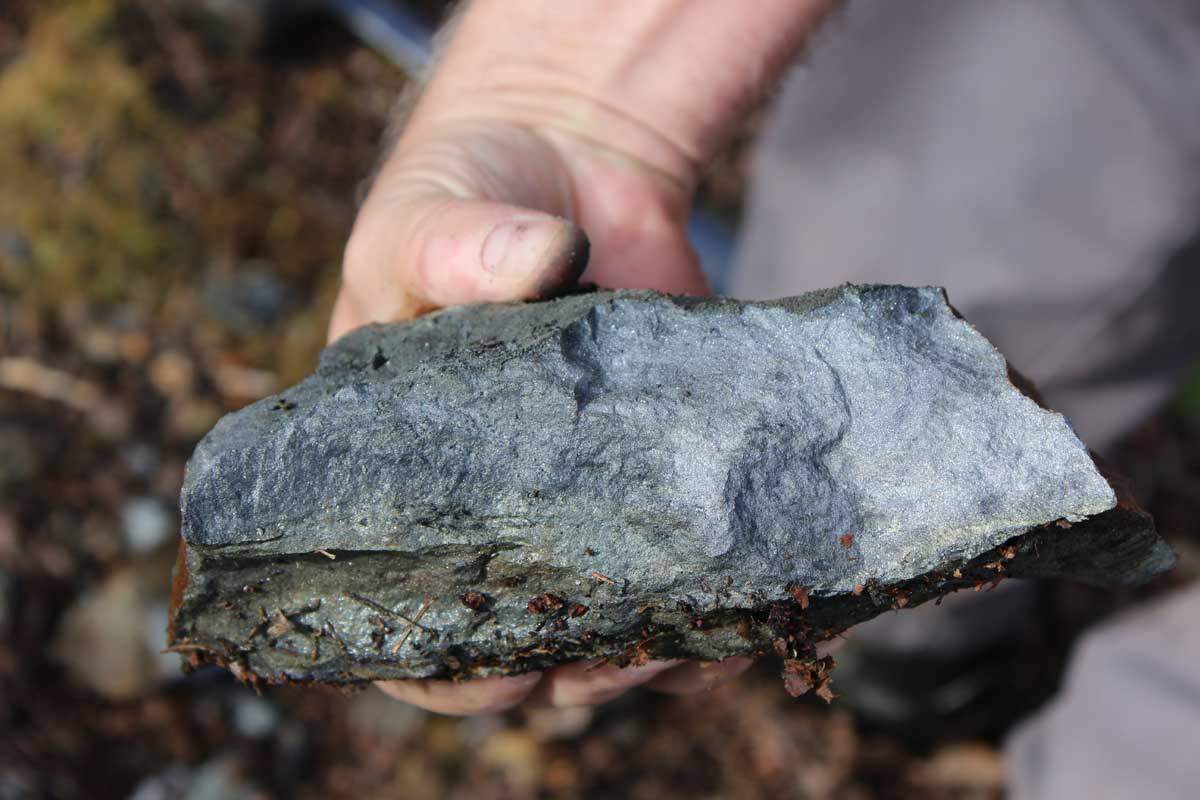
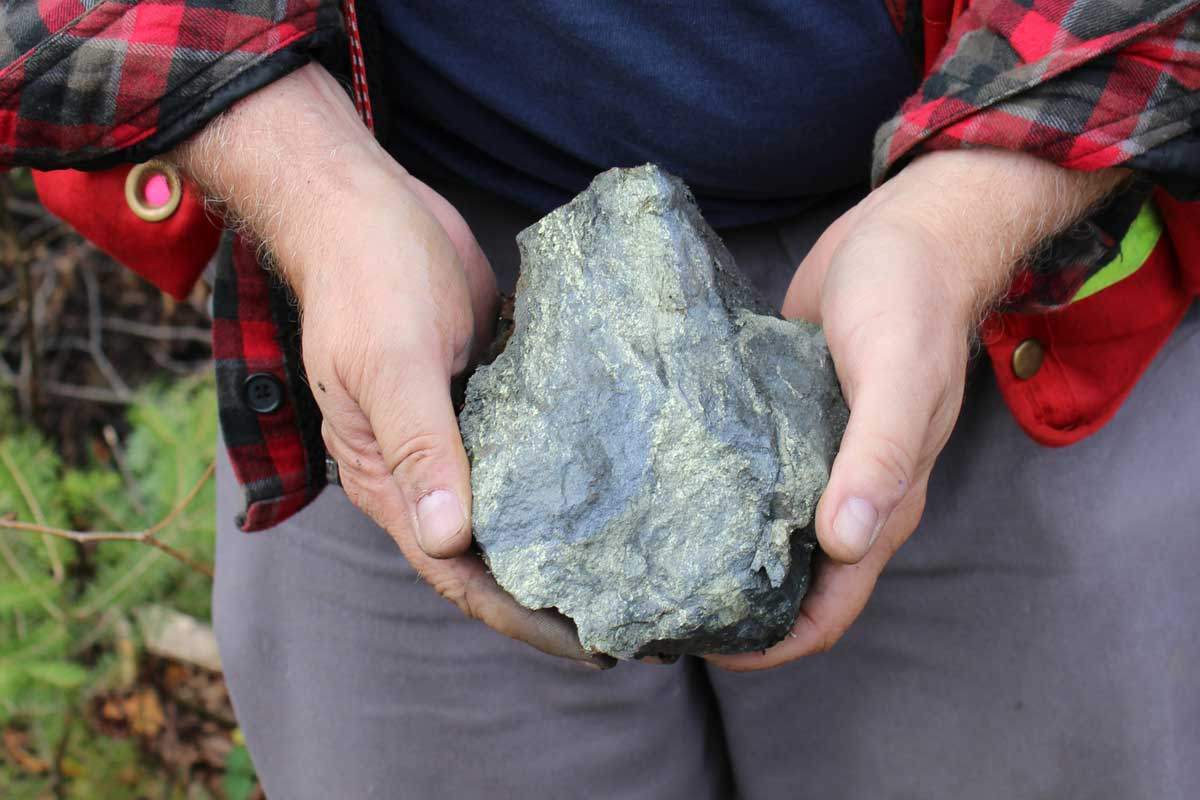
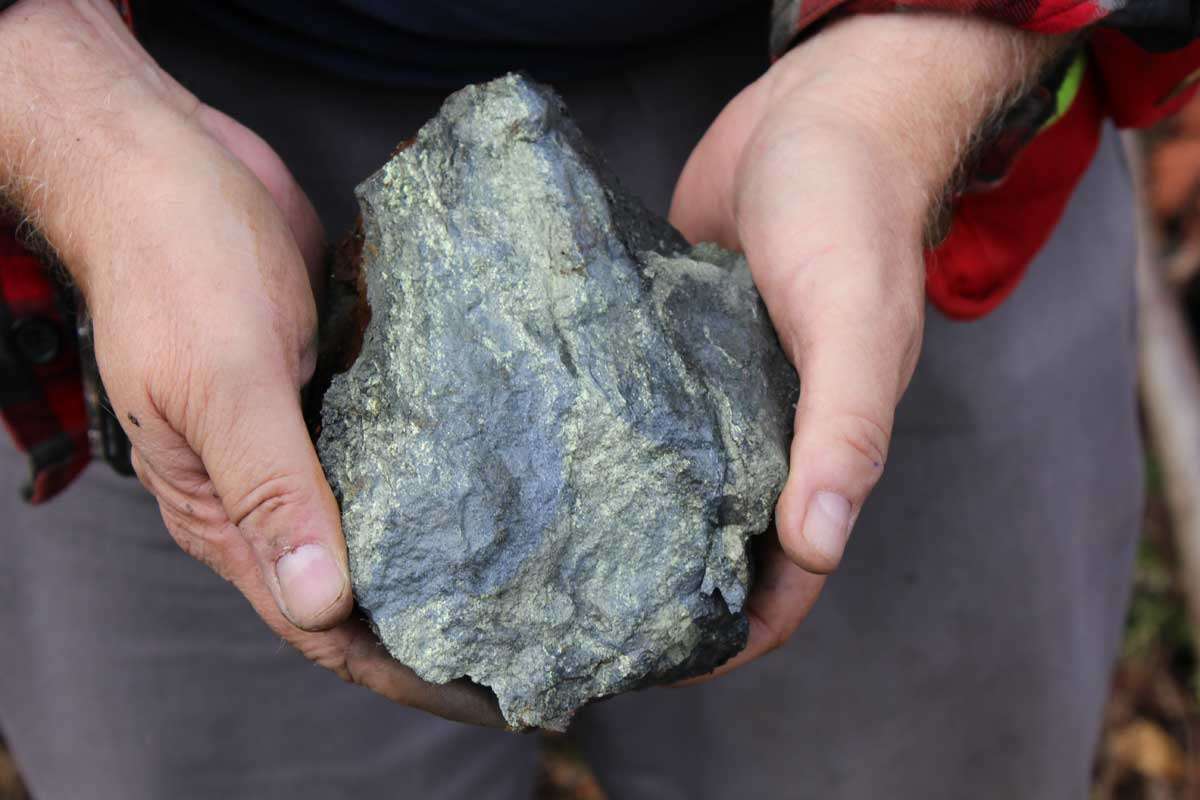
At Nine Mile Brook, the High-Grade VMS lens is well banded, resembling classic Brunswick Horizon mineralization with copper rich mineralogy on the south side and Pb, Zn and Ag on the north with select grab samples assaying up to 14% Cu, 32% combined Pb/Zn, 1216 g/t Ag and 3.7 g/t Au.
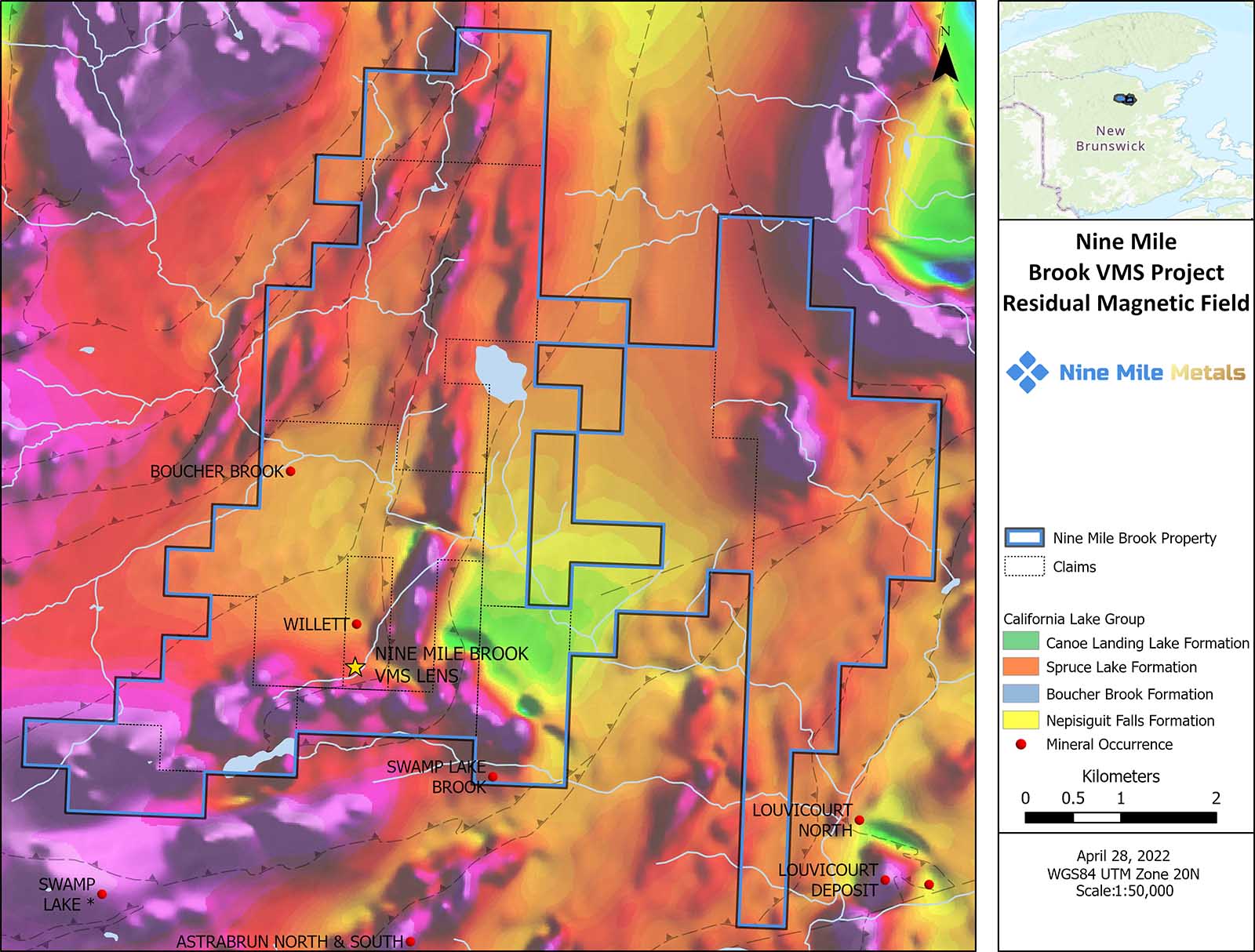
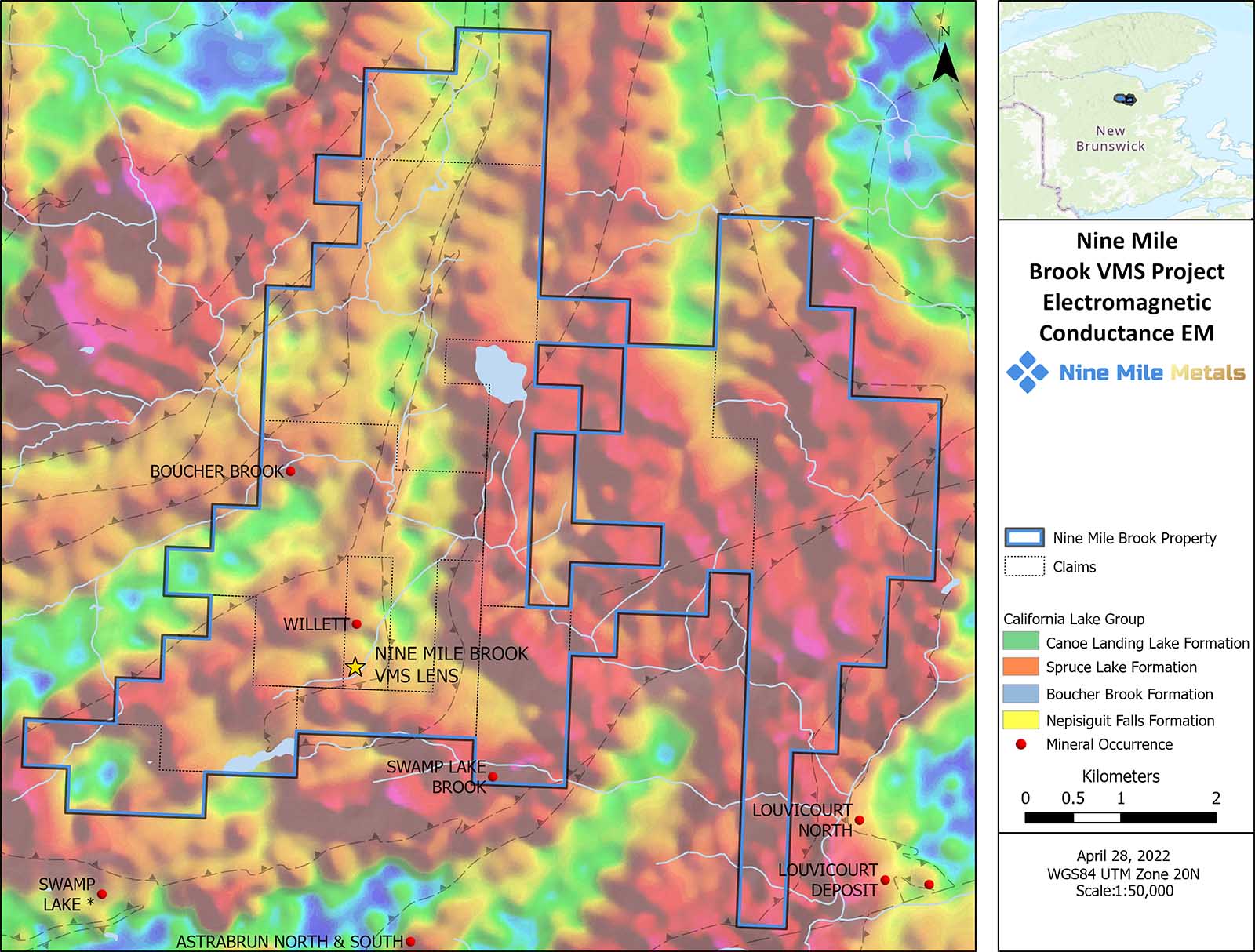
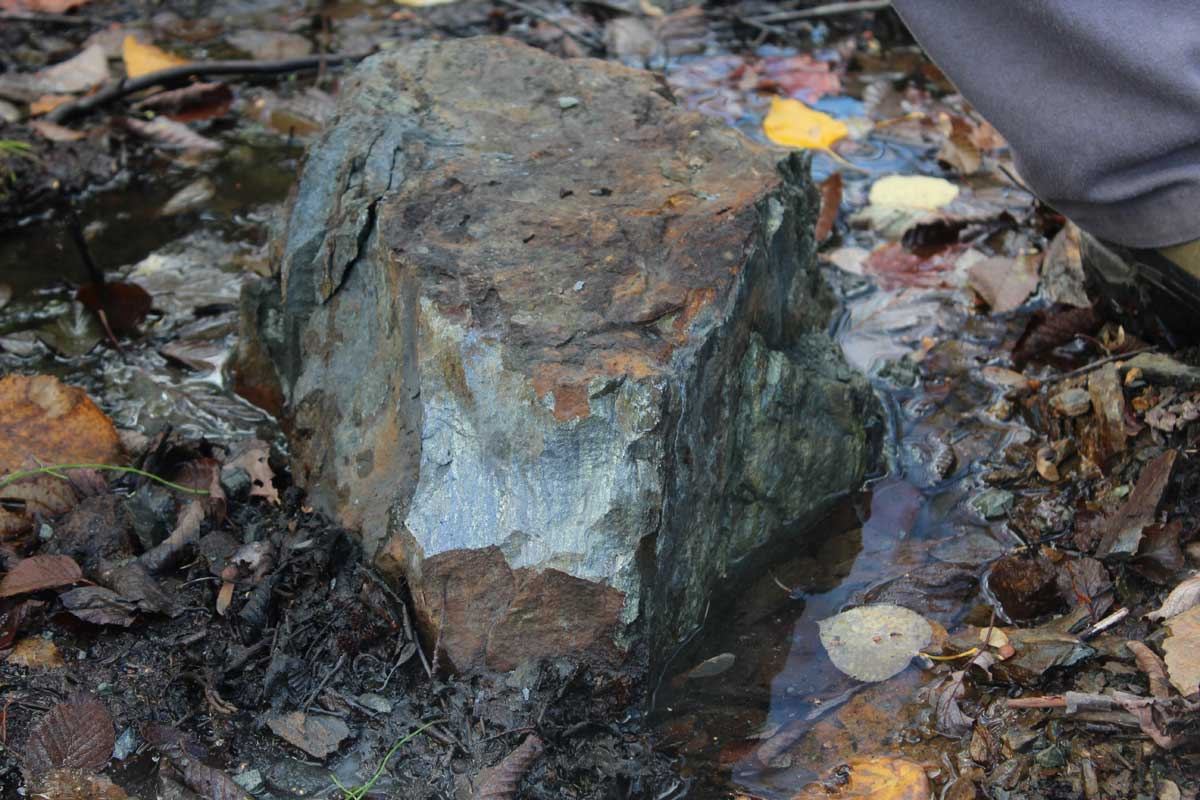
Measuring 2 x 10 meters at surface, the Nine Mile Brook VMS lens is found within a tectonic package accompanied by blocks of Spruce Lake rhyolite, a member of the larger California Lake Group.
The Spruce Lake rhyolite is locally well exposed, the Cu, Pb, Zn Boucher Brook occurrence located near the top of the sequence proximal to the contact with overlying graphitic slates. Time equivalent to the Nepisiguit Falls formation, host to the Supergiant Brunswick #12 mine, the Spruce Lake Formation is believed to be the source of the mineralized horizon. The Spruce Lake rhyolite also occurs in the deep footwall of the Canoe Landing Lake VMS deposit, 8 kilometers to the west.
over 15.10m · NM220004 · internal 1m samples to 18.55% Cu
the same 15.10m with zinc, lead, silver and gold included · individual samples to 22.06% CuEq
| Certified Drill Assays — NI 43-101 | ||||||
| Hole | Width | Cu % | Pb % | Zn % | Ag g/t | Au g/t |
|---|---|---|---|---|---|---|
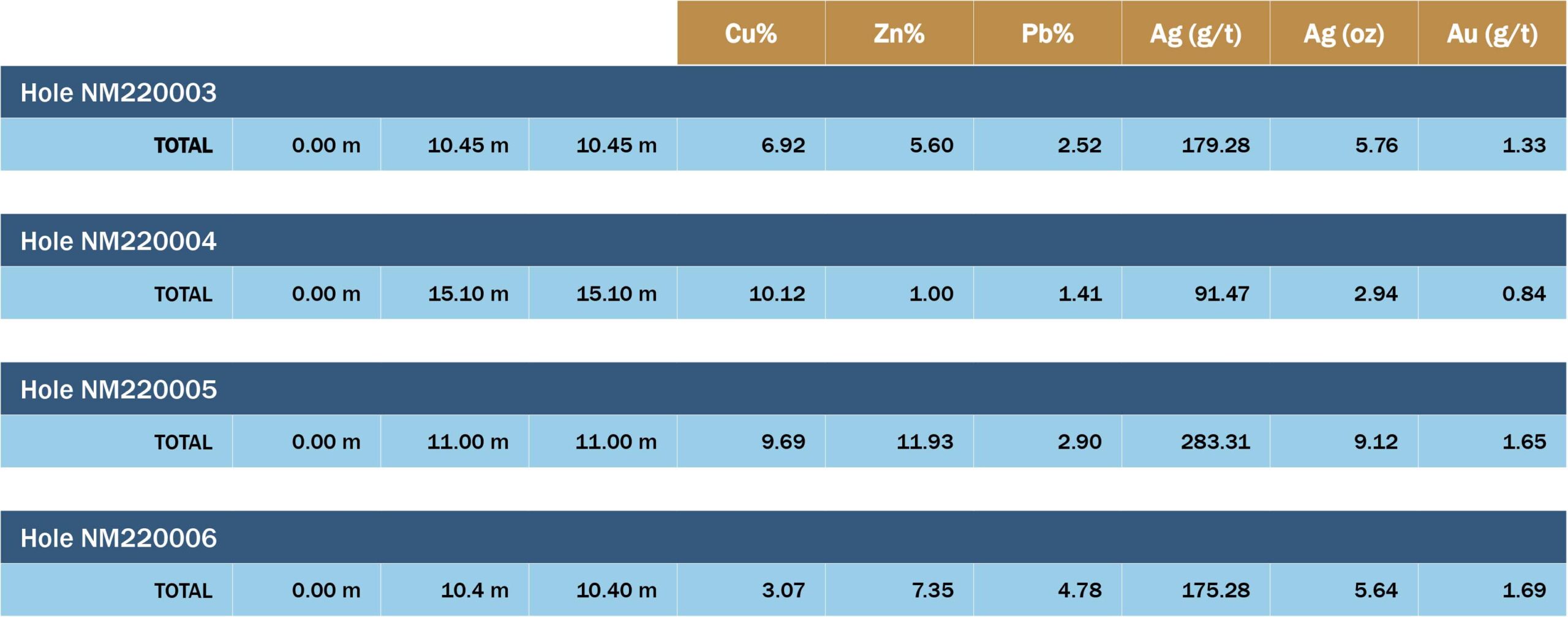
| NM220003 | 10.45m | 6.92 | 2.52 | 5.60 | 179.28 | 1.33 |
| NM220004 ★ | 15.10m | 10.12 | 1.41 | 1.00 | 91.47 | 0.84 |
| incl. Zone 1 VMS | 6.36m | 14.46 | 2.61 | 1.50 | 137.51 | 1.19 |
| NM220005 | 11.00m | 9.69 | 2.90 | 11.93 | 283.31 | 1.65 |
| NM220006 | 10.40m | 3.07 | 4.78 | 7.35 | 175.28 | 1.69 |
A high-grade polymetallic VMS lens in the camp that produced 180+ Mt.
Bulk sample permit approved. Site development and reclamation plan approved. Baseline water and sediment sampling complete. Notice of Planned Work filed.
Two representative samples of the lens — one from the copper-rich end, one from the lead-zinc-silver end — together with the entire 15.10 m core intersection from NM220004, the highest-grade copper hole ever drilled in the Bathurst Mining Camp. All at SGS in Lakefield, Ontario.
Direct Smelter Testing Analysis — Glencore Horne Smelter. SGS will provide two specific samples to Glencore, who will conduct their own metallurgical and mineralogical analysis for their Horne Smelter in Rouyn-Noranda, Quebec.
How the material breaks down, and how the five metals separate from the rock and from each other. SGS is running head grade analysis, mineral identification, hardness testing, and gravity and flotation work. Results will be reported when received.
No metallurgical results from the bulk sample program have been reported to date. Recovery, concentrate quality and any processing route remain undetermined until testing completes, and no assurance is given that testing will demonstrate commercially viable recovery. No mineral resource or mineral reserve has been estimated on any Company property. Certified drill assays as reported in the Company’s news release of 8 July 2022. See Technical Notes.
Our drill results are the highest grade drill results in the history of the BMC. Phase 1 Drill Program Certified Assays 2022 from May/June 2022 Drill Program.
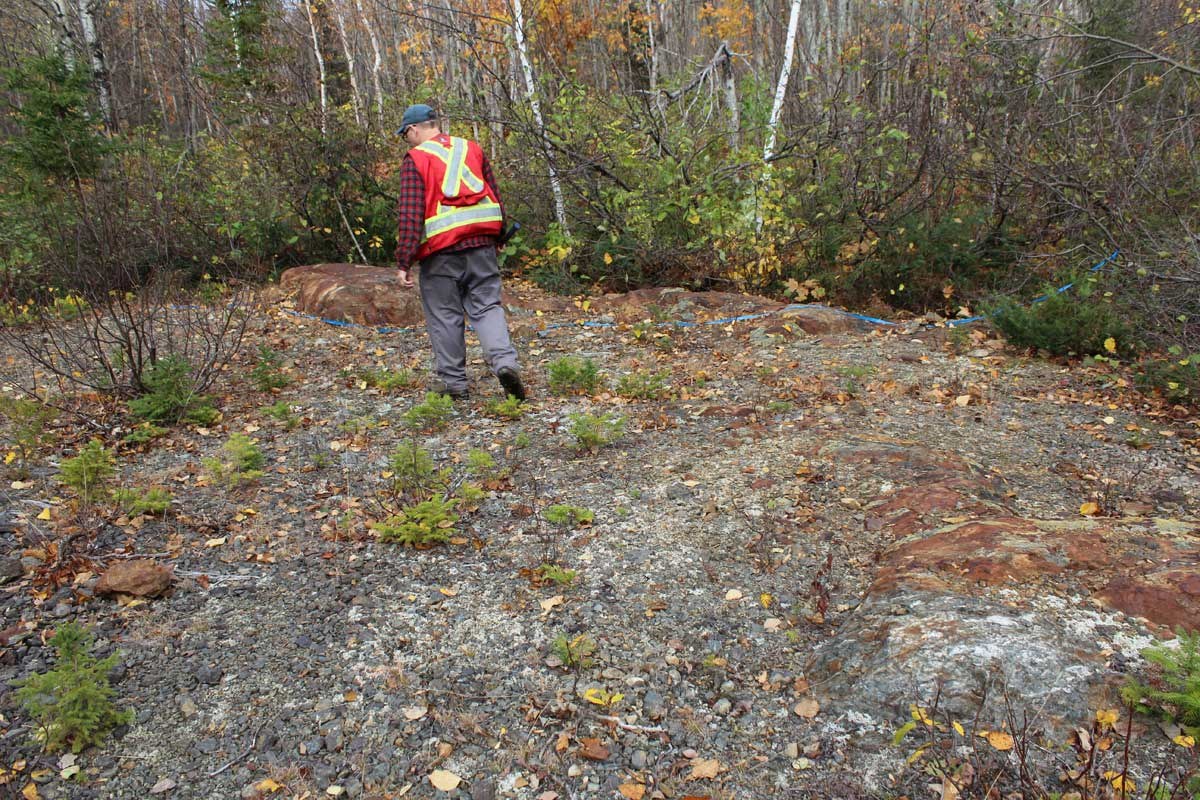
The Nine Mile Brook Project consists of 93 claim units (2,046 hectares) and covers the exposed Willett VMS Lens, a high-grade Cu, Pb, Zn massive sulphide lens located approximately 10.5 kilometers southwest of the Brunswick # 12 mine, a 335 MT orebody which produced for more than 50 years. The observed mineralization is well banded and massive in character, typical of the mineralization found in the BMC. Assays from select grab samples collected under the supervision of FMC from the Willett VMS Lens were submitted by FMC to Bureau Veritas Labs based in Timmins, Ontario, are shown in Tables 1 and 2.
| Sample # | Cu (%) | Pb (%) | Zn (%) | Au (g/t) | Ag (g/t) | Ag (oz/t) ** calculated |
|---|---|---|---|---|---|---|
| 209M0300 | 1.522 | 16.43 | 11.92 | 2.31 | 234 | 7.52 |
| 209M0301 | 0.657 | 12.29 | >20.00* | 2.28 | 288 | 9.26 |
| 209M0302 | 0.992 | 8.36 | >20.00* | 2.50 | 225 | 7.23 |
| 209M0303 | 0.195 | >20.00* | 15.51 | 3.63 | 459 | 14.76 |
| 209M0304 | 0.875 | 13.03 | >20.00* | 1.76 | 139 | 4.47 |
| 209M0305 | 0.318 | >20.00* | 14.72 | 3.01 | 785 | 25.24 |
| 209M0306 | 1.429 | >20.00* | 19.73 | 3.67 | 217 | 6.98 |
| 209M0307 | 8.902 | 8 | 10.83 | 1.78 | 328 | 10.55 |
The Silver results ranged from 4.47 oz to a prolific 25.24 oz/ton. The Gold results were 1.76 – 3.67 g/t with 6 samples reporting > 2.31 oz.
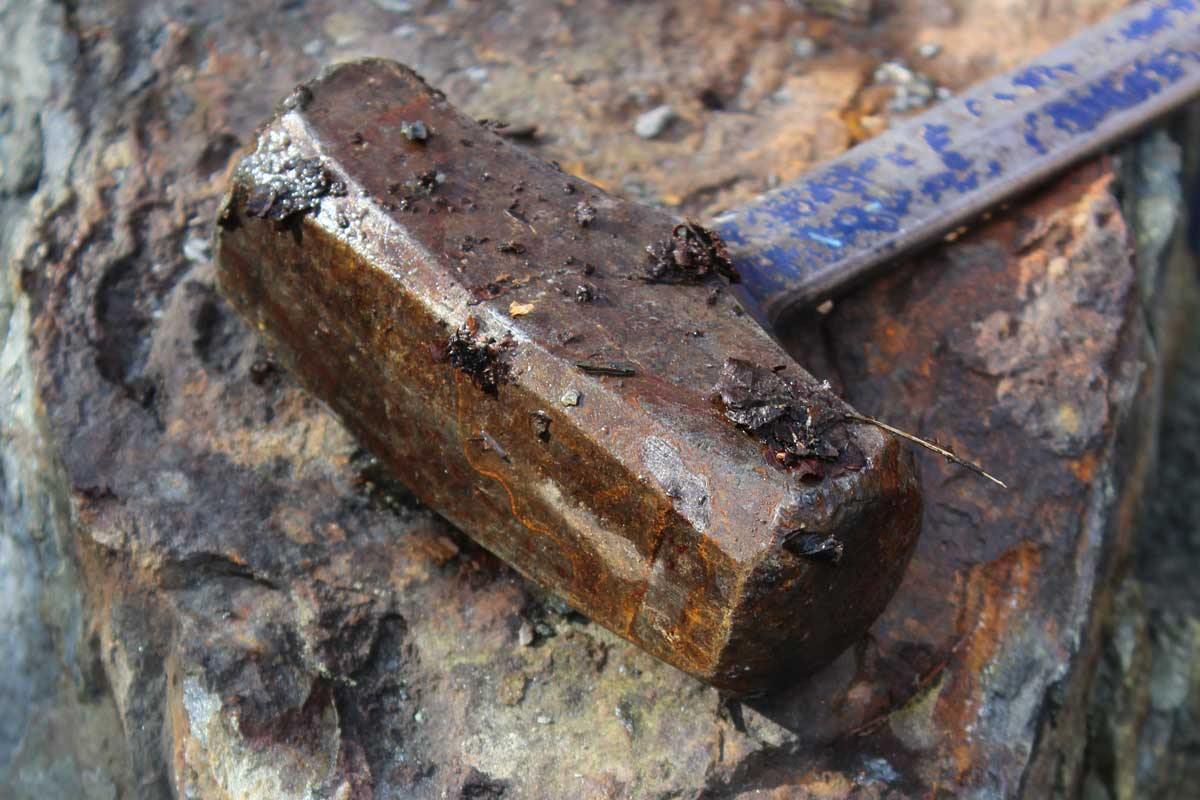
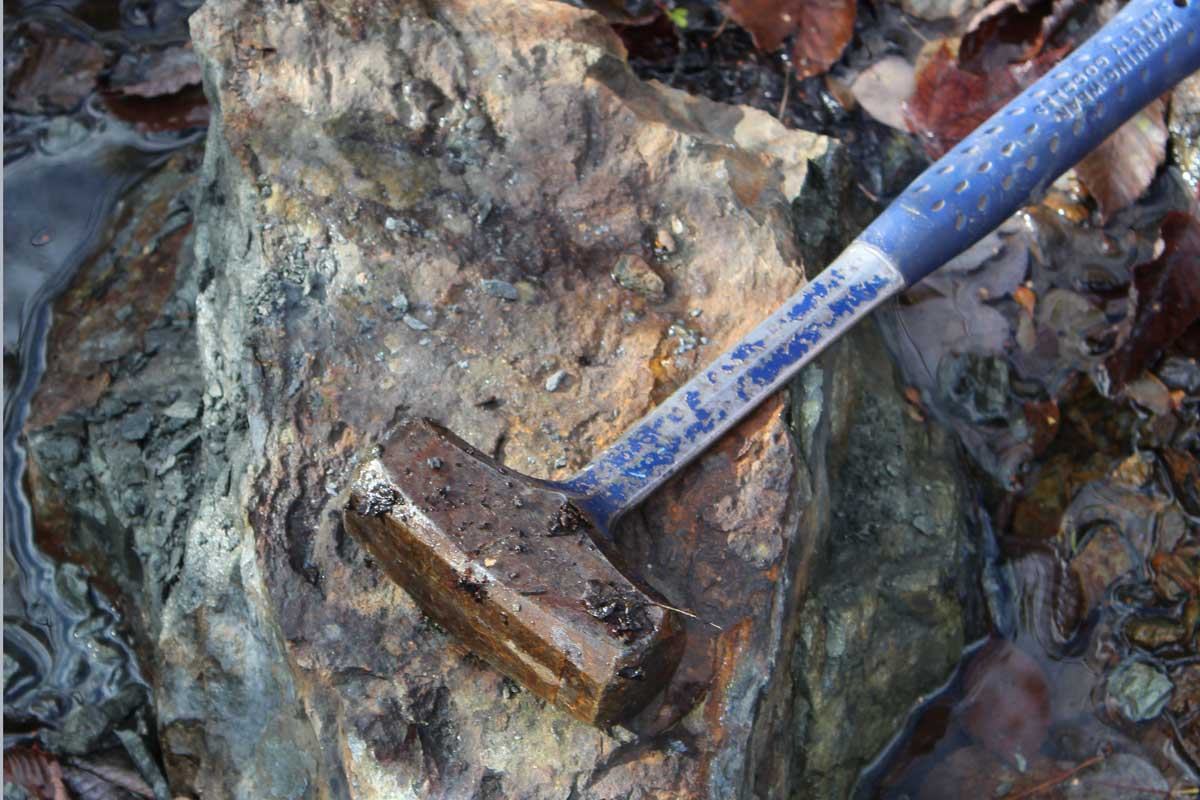
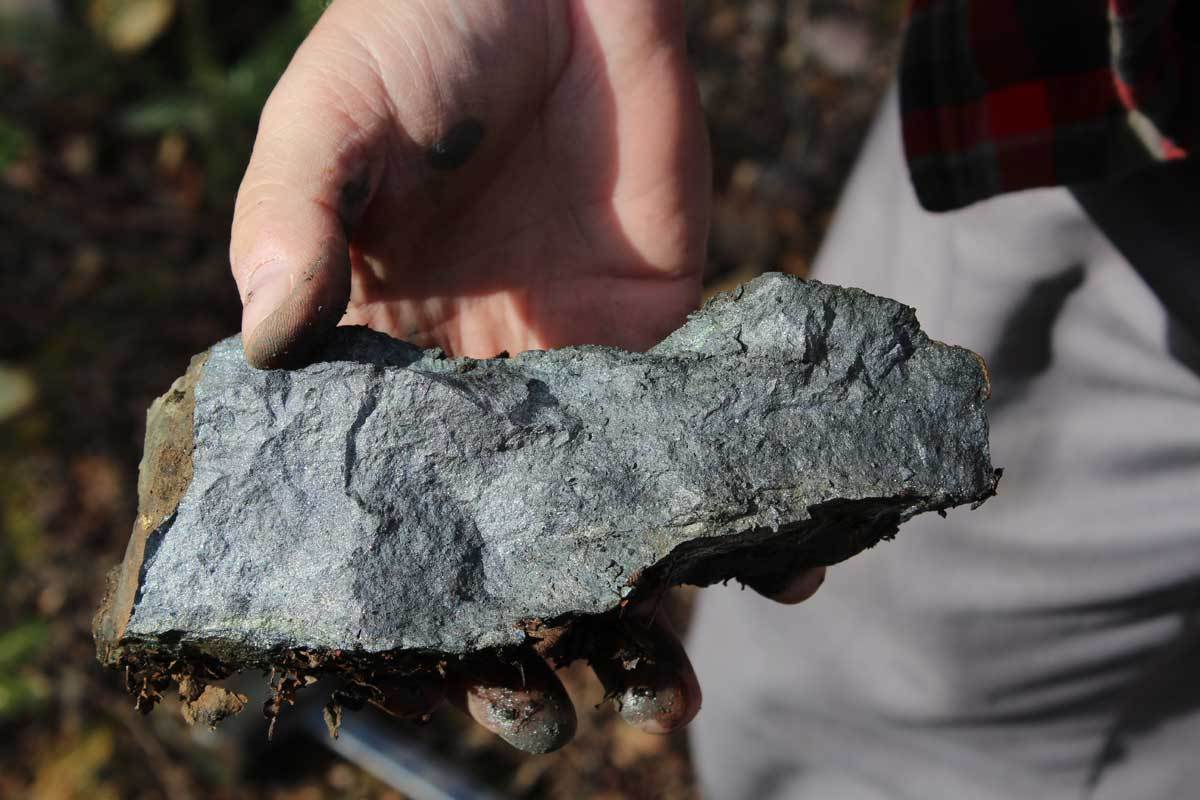
Recent sampling also included rocks from the main VMS exposure and from adjacent boulders, the samples consisting of well banded VMS with varying <1 to 1 inch + bands of visible copper, lead and zinc mineralization. Samples 20NM0200 and 20NM0201 were split in half prior submission to check on the homogeneity of the respective samples. In this sample set, the samples were either primarily high-grade copper with lead and zinc or high-grade lead-zinc with less copper. There are very good gold values ranging between 1.089 and 3.764 g/t Au, while the silver was more consistent than the results above, the results in Table 2, all over 2 oz per ton.
| Sample # | Cu (%) | Pb (%) | Zn (%) | Au (g/t) | Ag (g/t) | Ag (oz/t) |
|---|---|---|---|---|---|---|
| 20NM0200A | 12.402 | 0.4 | 0.04 | 1.179 | 73 | 2.35 |
| 20NM0200B | 11.209 | 0.32 | 0.04 | 1.089 | 67 | 2.15 |
| 20NM0201A | 2.803 | 17.37 | 17.63 | 2.542 | 66 | 2.12 |
| 20NM0201B | 3.385 | 17.12 | 15.42 | 2.938 | 85 | 2.73 |
| 20NM0202 | 2.625 | 5.81 | 16.08 | 3.298 | 72 | 2.31 |
| 20NM0203 | 2.108 | 17.9 | 9.08 | 3.764 | 98 | 3.15 |
| 20NM0204 | 14.142 | 1.63 | 1.65 | 2.377 | 66 | 2.12 |
| 20NM0205 | 4.238 | 5.52 | 17.66 | 2.969 | 70 | 2.25 |
Both sample sets (Tables 1 & 2) demonstrate the high-grade base metal potential at the Nine Mile Brook VMS Project.
*The reader is cautioned that these grab samples characterize the higher – grade mineralization. Not all samples should be considered representative of the mineralized zones hosted within the projects, documented in part by these samples.
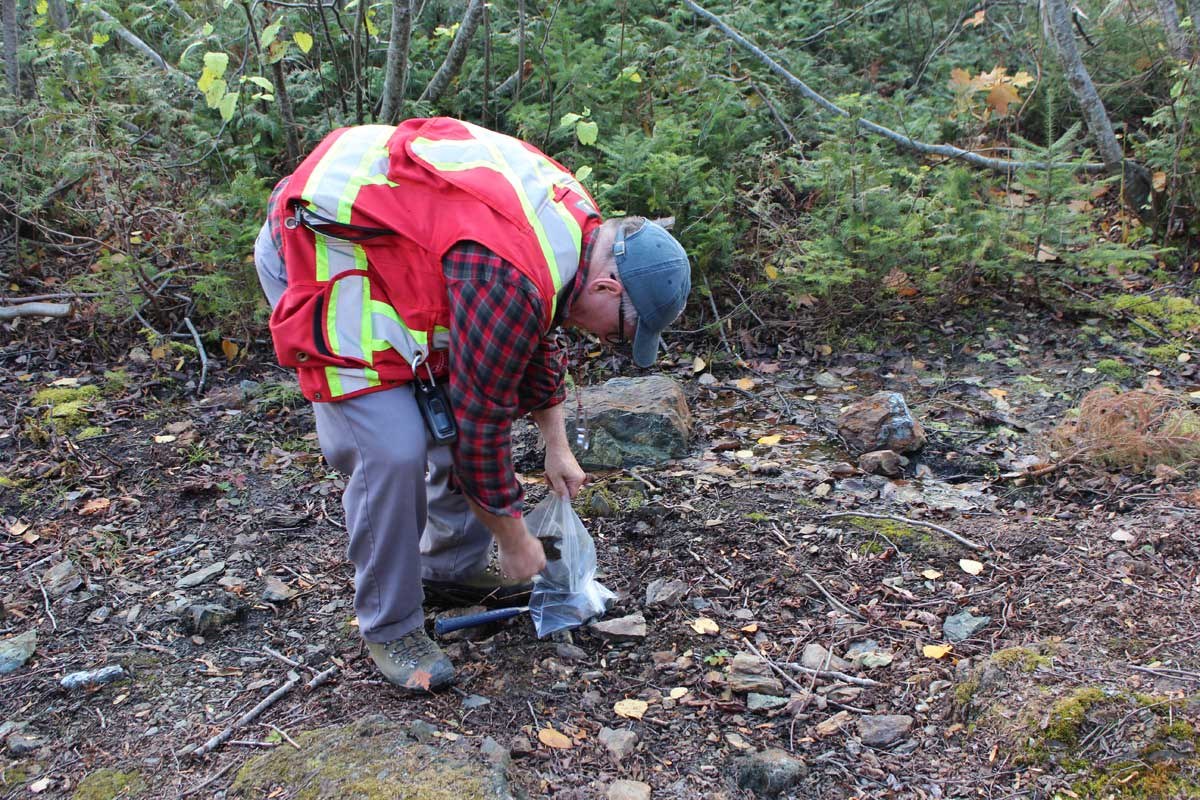
Prior to Nine Mile Metals acquiring its interest in Nine Mile Brook Project from Fiddlehead Mining Corp. (“FMC”), FMC completed a work program in September 2021 to sample sections of the VMS Lens Extension. Ten (10) samples were broken off the VMS Lens Extension for assay and submitted for analysis to Bureau Veritas Laboratories located in Timmins, Ontario (“BV Labs”). Due to the high-grade nature of the samples, analytical package AR404 was requested, the method specifically designed for high precision and accuracy required to quantify commodity elements for resource evaluation. This method had an upper limit maximum of 20% for copper, lead, and zinc. Since some values were above the maximum limit, analytical packages MA370 and GC817 were also employed by BV Labs, the latter having an upper limit of 100% Pb for lead. The results are summarized below in Table 1 below.
| Sample # | Cu (%) | Pb (%) | Zn (%) | Pb-Zn (combined %) | Au (g/t) | Ag (g/t) | Ag (oz/t) |
|---|---|---|---|---|---|---|---|
| 219M01 | 7.394 | 16.63 | 9.92 | 26.55 | 1.195 | 450 | 14.47 |
| 219M02 | 3.235 | 20.73 | 9.95 | 30.68 | 1.234 | 433 | 13.92 |
| 219M03 | 1.894 | 19.82 | 11.19 | 31.01 | 0.761 | 346 | 11.13 |
| 219M04 | 1.769 | 12.13 | 19.79 | 31.92 | 2.446 | 111 | 3.57 |
| 219M05 | 7.527 | 0.41 | 0.16 | 0.57 | 1.366 | 48 | 1.54 |
| 219M06 | 1.063 | 19.12 | 16.61 | 35.73 | 2.694 | 166 | 5.34 |
| 219M07 | 0.692 | 19.02 | 8.09 | 27.11 | 2.317 | 315 | 10.13 |
| 219M08 | 7.493 | 0.31 | 0.06 | 0.37 | 1.456 | 281 | 9.04 |
| 219M09 | 0.532 | 16.07 | 22.11 | 38.18 | 2.370 | 81 | 2.61 |
| 219M010 | 0.849 | 9.64 | 27.06 | 36.70 | 2.240 | 308 | 9.90 |
The base and precious metal values encountered in this last round of sampling are great in both grade and consistency. The assay results demonstrate the variability within the VMS sequence at Nine Mile Brook, highlighted by discreet, higher-grade sections of both base and precious metals.
In 2022, the Company’s exploration will focus on defining potential targets within and proximal to the California Lake Group Volcanics to the north of the VMS lens. To assist, high-definition UAV magnetics will be utilized to define the extent of the mineralized lens and associated geologic contacts.
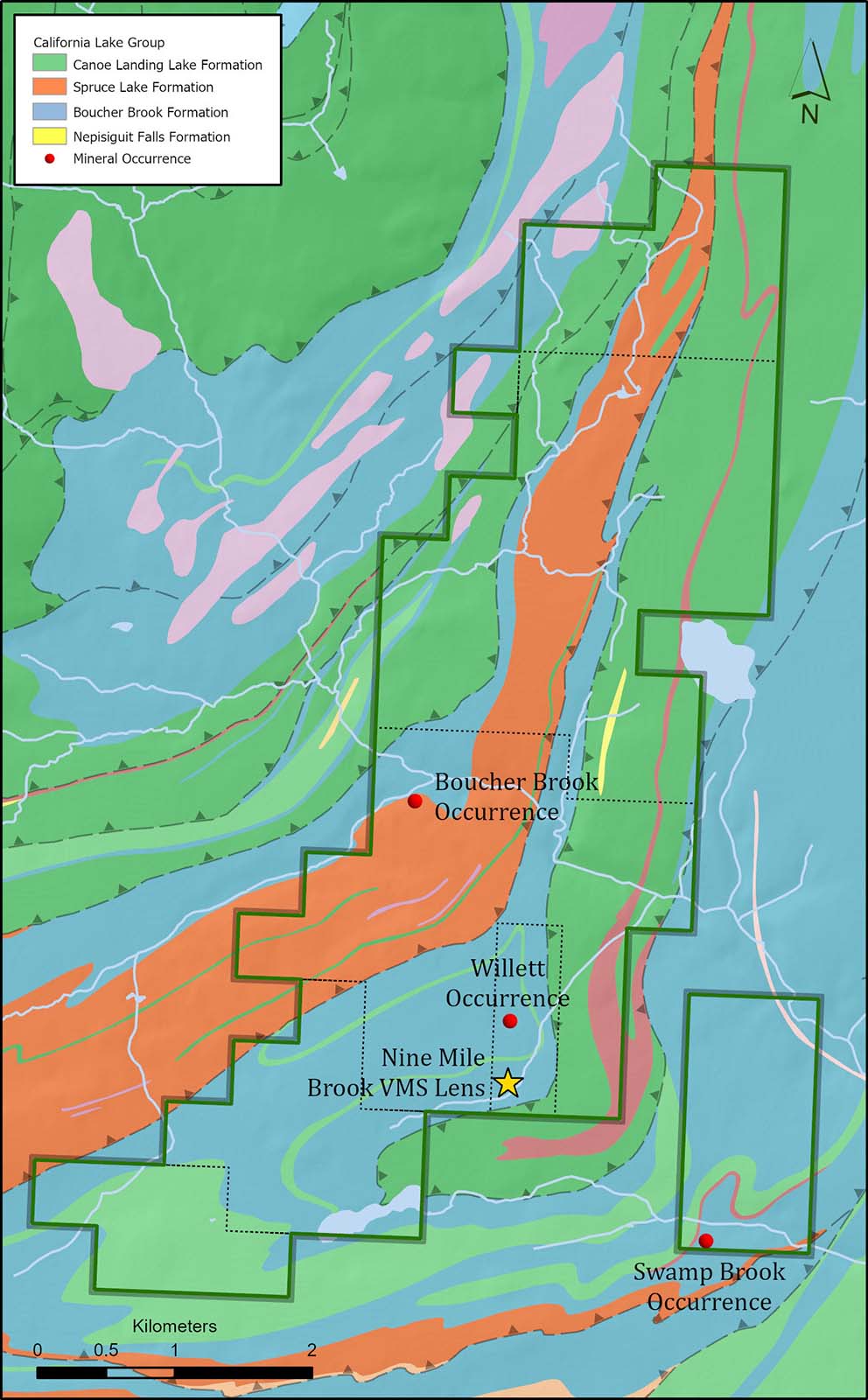
Host to the Trevali Mining Corp’s Caribou Mine, the California Lake Group, depicted in orange on Figure 1 above, is one of the 3 major units that host VMS deposits in the BMC. The flagship Nine Mile Brook hosts a large geological section through the core of its land package. This high priority target area is up ice and may have been the potential source of the exposed VMS mineralization.
Historic production tonnages and grades sourced to McCutcheon, S.R. and Walker, J.A. (2020), Geoscience Canada, v.47(3), Table 1, published by the Geological Association of Canada. Nine Mile results are drill intersections, not deposit grades, and are not directly comparable to the mined deposits above. Copper equivalent values are calculated on the metal prices and recovery assumptions disclosed in each result’s news release and differ between holes; they are not directly comparable. See Technical Notes and the Company’s filings on SEDAR+.
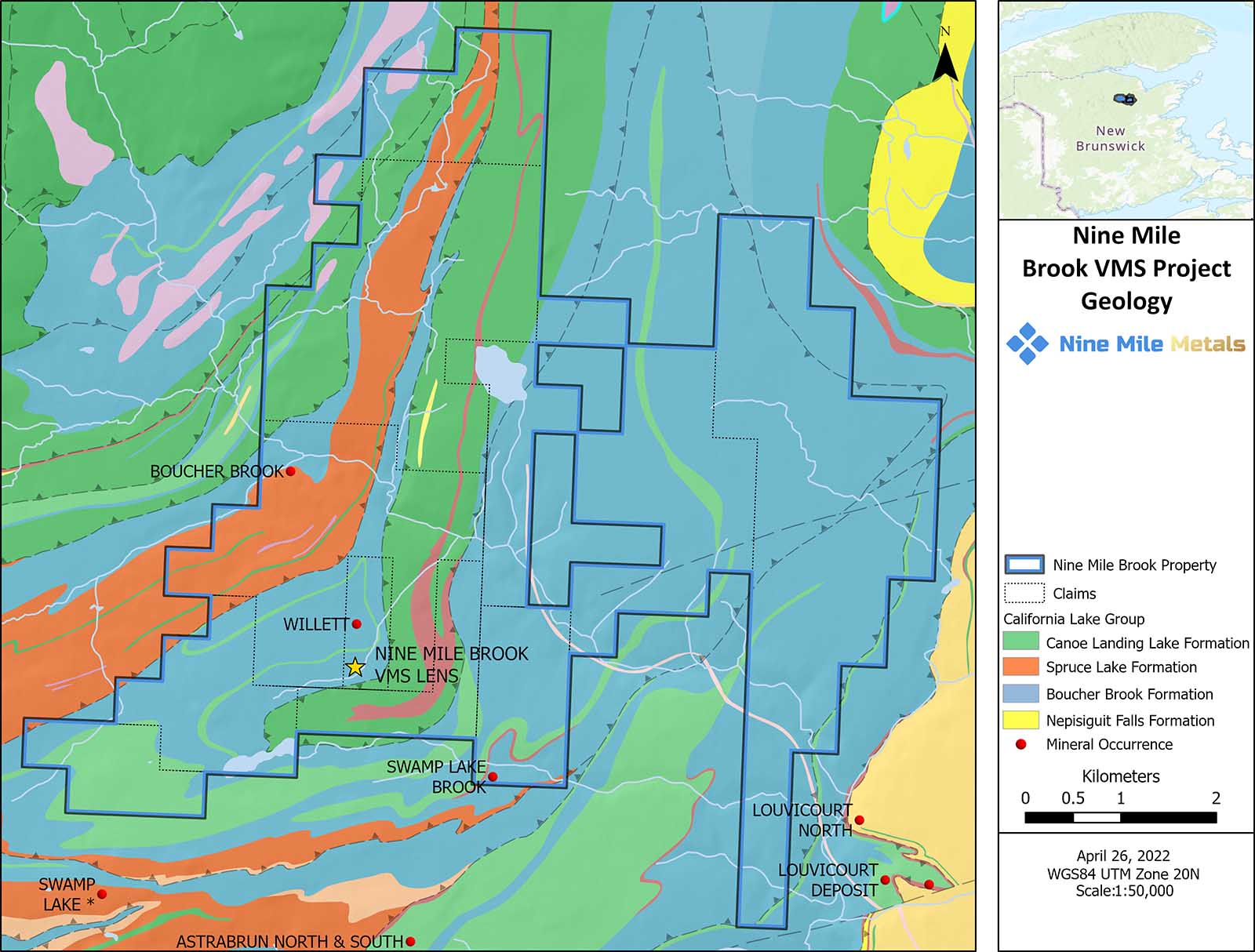
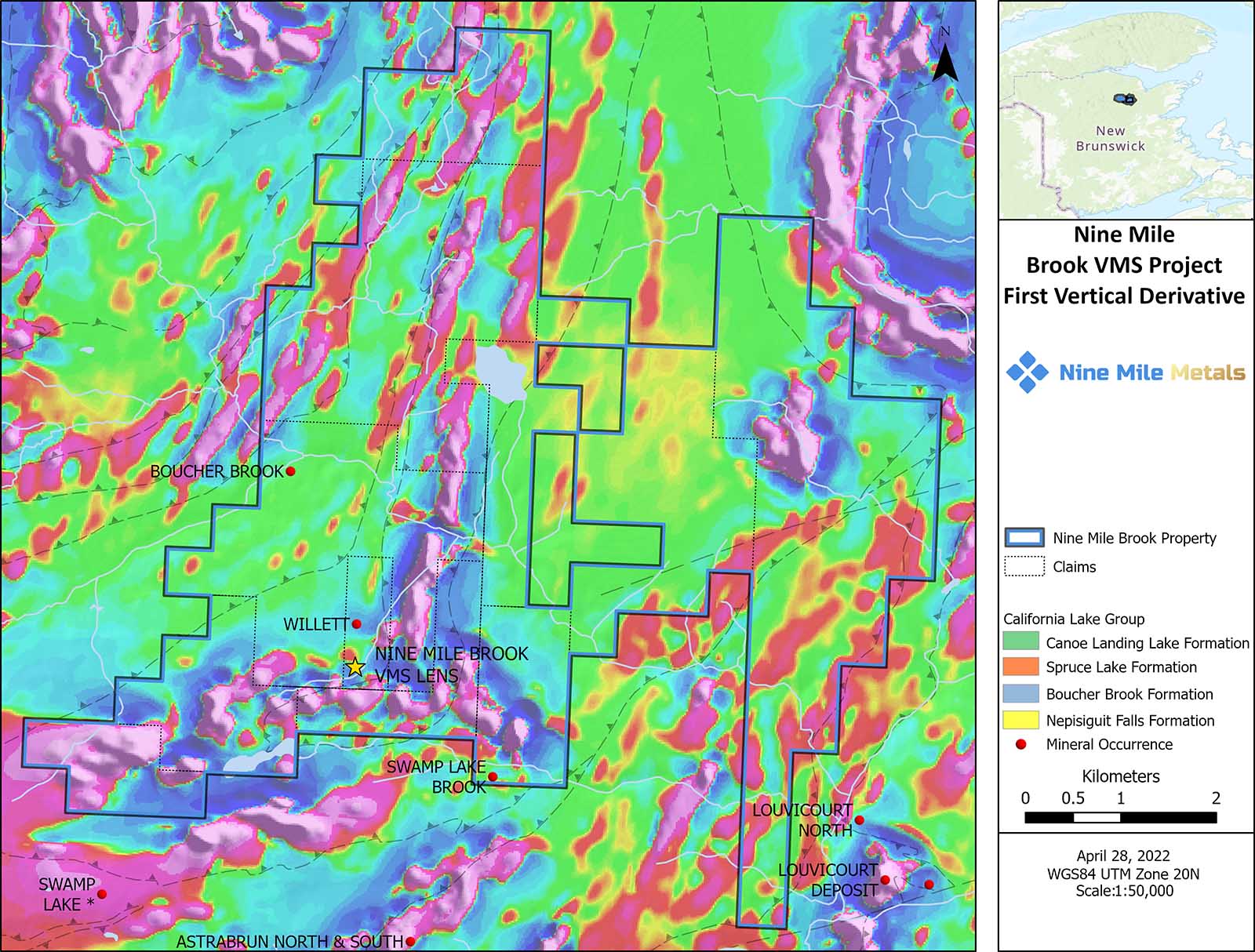
Click images above to enlarge
Junior Mining Hub is the ultimate destination for all Junior Mining News and information.
WD-26-09 and WD-26-10 intervals are reported as true widths. All other widths are drilled core lengths and true widths are not yet known. Certified assay results and visual estimates from core logging are identified separately wherever they appear. Assays for the remaining Phase 3 holes are pending at ALS Global.
Copper equivalent values are for comparison only and are not directly comparable between holes; each is calculated on the metal prices and recovery assumptions disclosed in its own news release, which differ by release.
| Hole / Group | Pricing Date | Source | Recovery |
|---|---|---|---|
| 2024 Wedge holes | 13 May 2024 | — | 80% |
| WD-25-02 | 13 February 2026 | — | 80% |
| Nine Mile Brook bulk sample | 27 February 2026 | — | 80% |
| WD-25-2B | 1 April 2026 | — | 80% |
| WD-26-09 | 11 August 2026 | Bloomberg | 95% |
| WD-26-07 | 15 August 2026 | Bloomberg | 95% |
| WD-26-10 | 26 August 2026 | Kitco | 95% |
Cominco production figures for the Wedge — approximately 1.5 Mt at 2.88% Cu, mined 1962–1968 — are historical, are sourced to McCutcheon et al. (2005), predate National Instrument 43-101, have not been verified by a Qualified Person, and are not current mineral resources or mineral reserves. Historic camp production tonnages and grades are sourced to McCutcheon, S.R. and Walker, J.A. (2020), Geoscience Canada, v.47(3), Table 1, published by the Geological Association of Canada.
No mineral resource or mineral reserve has been estimated on any Nine Mile Metals property to date. A mineral resource estimate for the Wedge is in progress; there is no assurance that it will be completed or that it will support a mineral resource. Geophysical targets shown are conceptual, are derived from modelling, and are not mineral resources.
Samples are analyzed by ALS Global, Moncton, New Brunswick, an accredited laboratory independent of the Company. Base metals by ME-ICP61a four-acid digestion with ICP-AES; gold by fire assay Au-AA23 with AA finish; overlimit gold by gravimetric analysis and overlimit base metals by OG62. ALS runs its own QA/QC protocols including coarse and pulp duplicates. The Company inserts certified reference materials, duplicates and blanks with review of all results; QA/QC and data validation were performed and no material errors were observed.
The scientific and technical information in this presentation has been reviewed and approved by Gary Lohman, B.Sc., P.Geo., VP Exploration and Director, the Company’s Qualified Person under National Instrument 43-101. Mr. Lohman is not independent of the Company. The Qualified Person has verified the data underlying the technical information in this presentation, including sampling, analytical and test data.
References to the Bathurst Mining Camp as the third largest VMS camp in the world are based on published district tonnage comparisons, which rank the camp third at approximately 250 Mt. Source: Barrie, C.T. and Hannington, M.D., Classification of Volcanic-Associated Massive Sulfide Deposits Based on Host-Rock Composition, Reviews in Economic Geology. That comparison excludes districts in China and the former Soviet Union.
Get notified about the latest company news and updates by signing up below.